


The right tools for painting: brushes, rollers and tape
The tools decide how the paint is applied and how the surface looks when it has dried. A brush is used for edges and woodwork, a roller for large surfaces and tape for the line between two surfaces. This guide covers how to choose each tool, how to use it and how to clean it.
01The brush
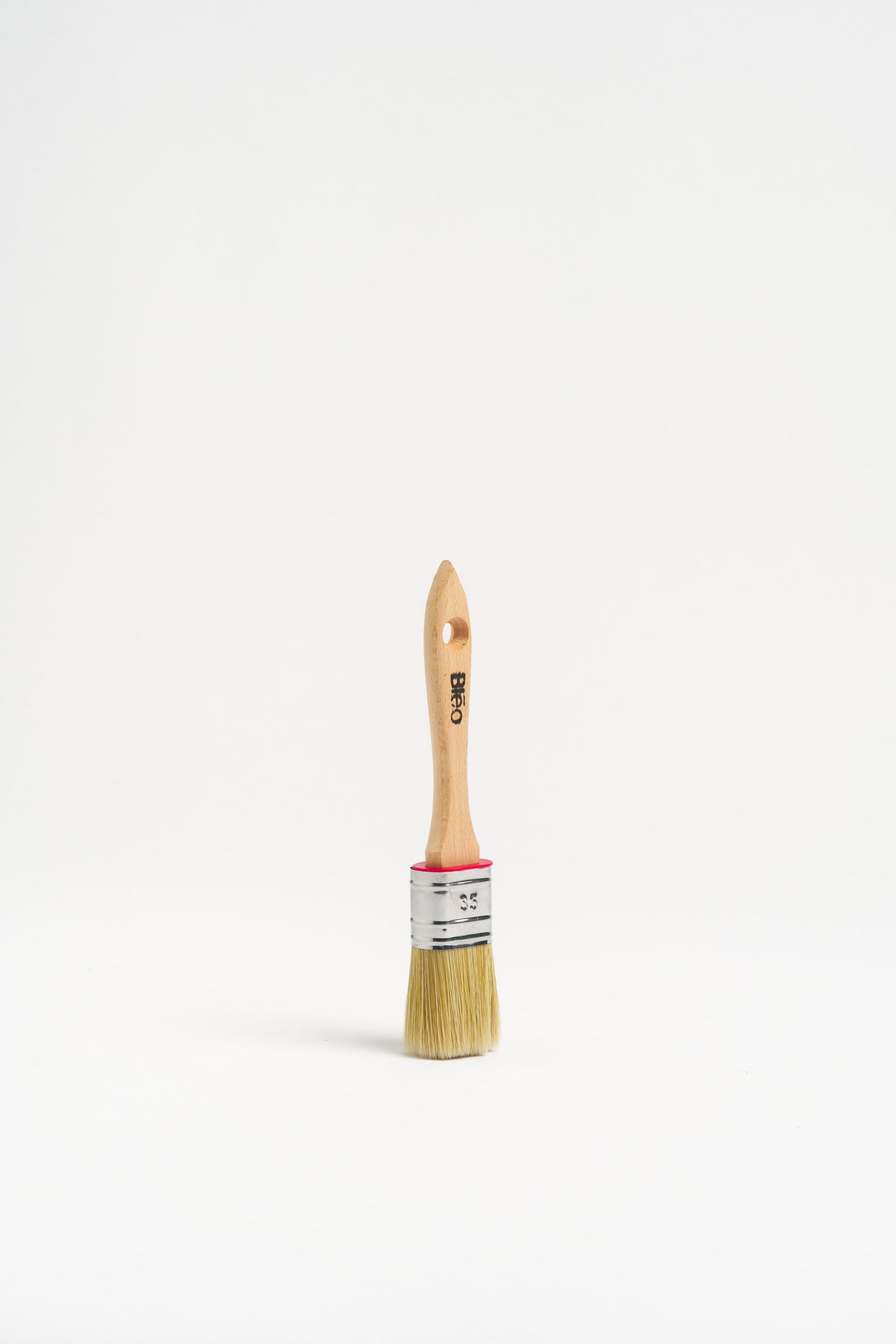
A brush is used for edges, corners, mouldings and woodwork, where a roller cannot reach. An angled brush has bristles cut at a slant and follows the line between wall and ceiling. A round or oval brush holds more paint and is used for doors, frames and furniture.
Choose a brush with dense bristles that return to shape when pressed. For water-based paint, synthetic bristles are recommended, as they keep their stiffness and release the paint evenly. A width of 40 to 50 mm suits most work. A narrower brush is used for window frames and details.
02The roller
A roller covers large surfaces quickly and applies an even layer of paint. The length of the pile depends on the surface:
- Short pile (around 6 mm) for smooth walls, ceilings and high gloss.
- Medium pile (around 12 mm) for lightly textured walls.
- Long pile (18 mm and up) for rough surfaces such as render and brick.
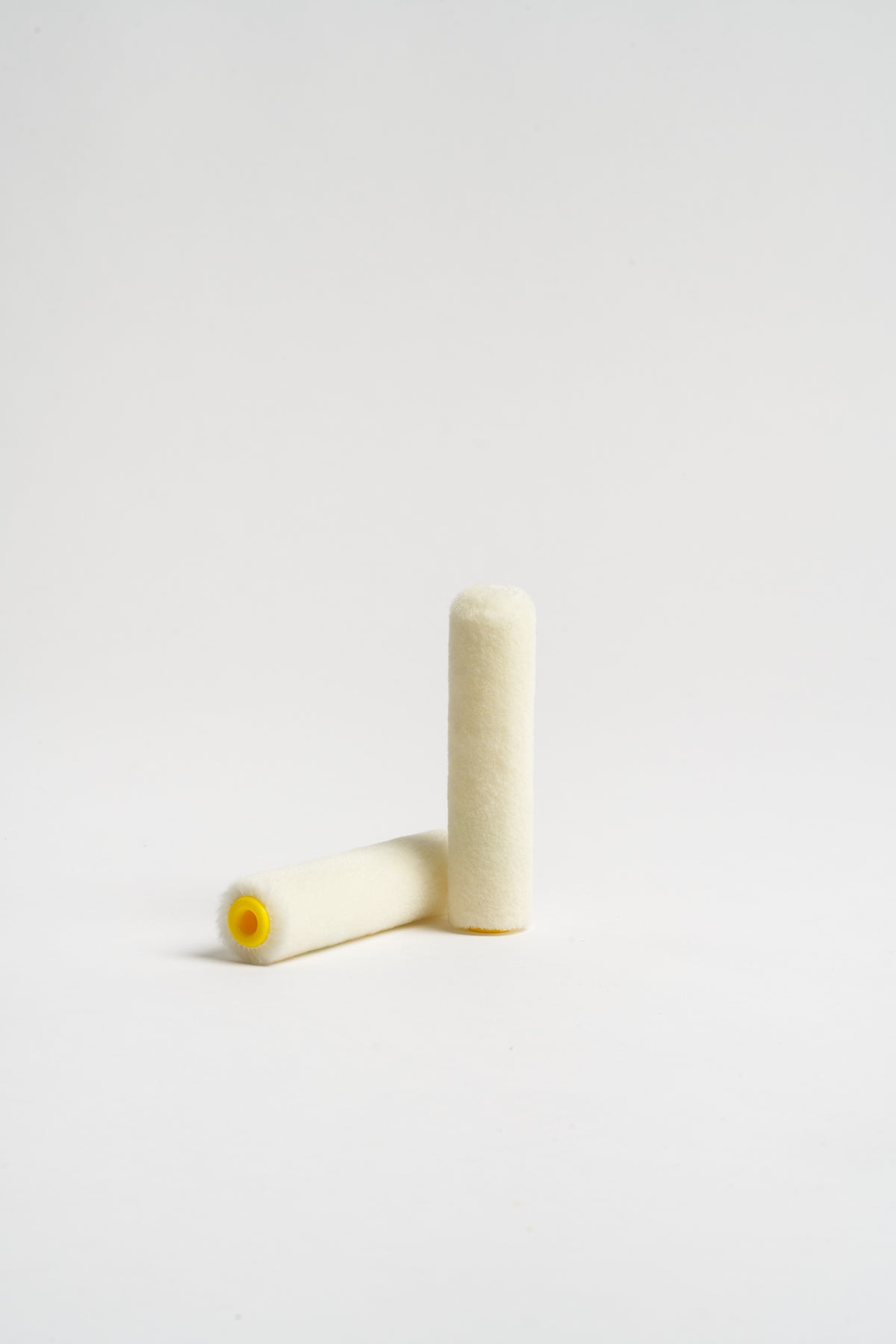
A roller of around 10 cm is used for doors, shelves and furniture. For walls and ceilings, a roller of 18 to 25 cm is used. Microfibre and foam rollers are recommended for water-based paint, as they release few fibres.
03Masking tape
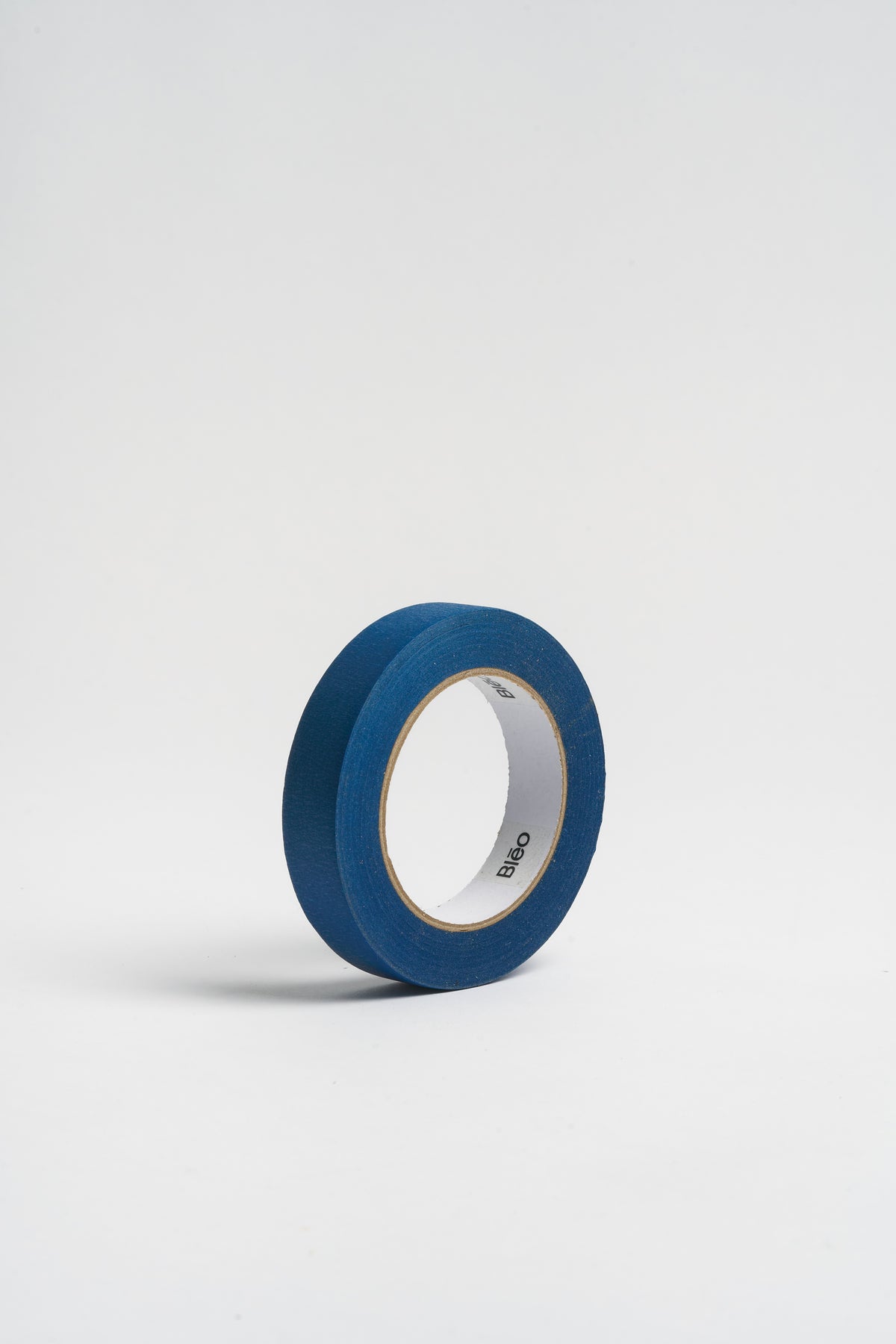
Painter’s tape protects edges and marks the line where two colours or surfaces meet. Use a tape made for delicate surfaces, which adheres well and can be removed without residue. Press the edge down with a finger or a flat tool before painting.
Remove the tape while the last coat is still slightly soft, pulling it away slowly at an angle.
04Other tools
- Roller tray and grid
- Extension pole for ceilings and tall walls
- Dust sheets for floors and furniture
- Filling knife and sanding block for preparation
- Paint stirrer
- Lint-free cloth for removing dust
05Using the tools
- Start with the brush and paint along edges, corners and frames.
- Roll the surface while the painted edge is still wet.
- Load the roller evenly and work in bands with light pressure.
- Finish each section with a long pass in one direction.
- Use a new roller for each coat when a high gloss finish is applied.
06Cleaning the tools
Clean brushes and rollers in lukewarm water with a little mild soap immediately after use. Work the paint out from the base of the bristles, shake out the water, reshape the bristles and let the tool dry.
Between coats, a brush or roller can be wrapped in cling film or a bag to keep the paint from drying.
Frequently asked questions
Which brush is used for water-based paint?
A brush with synthetic bristles, which keep their stiffness in water-based paint.
Which roller is used for a smooth surface?
A short-pile microfibre or foam roller. It is used for ceilings, smooth walls and high gloss.
How is a straight line made with masking tape?
Press the edge of the tape down, paint, and remove the tape while the last coat is still slightly soft. Pull it away at an angle.
Is a new roller needed for each coat?
No. A clean roller can be reused. For high gloss, a new roller for each coat reduces the risk of fibres in the film.
How are brushes cleaned after water-based paint?
Rinse in lukewarm water with mild soap, work the paint out from the base of the bristles, reshape and let them dry.
Use the paint calculator to work out how much paint is needed, and see Help & Guidance for more information.
